August 25, 2021

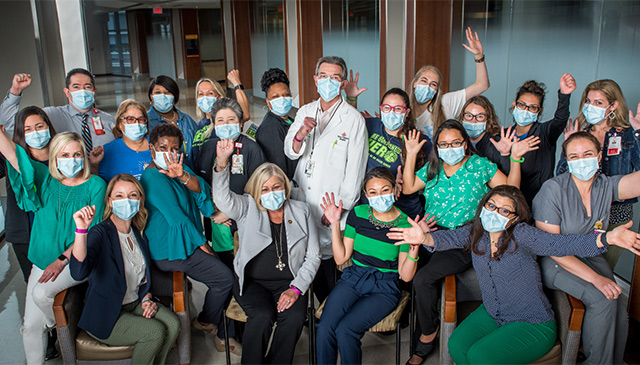
Texas Children’s is one of the best employers in Texas for 2021, according to a list released by Forbes and compiled from surveys sent to 80,000 Americans around the country.

Texas Children’s is ranked No. 33 on the list of 101 top Texas employers from a variety of industries. The organization is the only children’s hospital in the state to be featured, and one of only two Houston-based health care organizations in the top 35 best Texas employers overall.

“After a challenging 2020, I couldn’t be prouder of the hard work exhibited by our team at Texas Children’s,” said President and CEO Mark A. Wallace. “Time and time again, Texas Children’s workforce has shown incredible perseverance and sincere commitment to our values and our mission. The strength of our people is what makes us such a strong organization, and it is an honor to support our teams as they build rewarding and long-lasting careers at Texas Children’s.”

The Best Employers by State rankings were achieved through a collaboration between Forbes and data company Statista. To determine the list, a survey was sent to 80,000 Americans working for businesses with at least 500 total employees across 25 industries. The surveys were anonymous and asked about working conditions, salary, potential for growth, diversity and more.

Texas Children’s has made Forbes’ best in-state employers list every year since its inception in 2018. In 2020, the organization was ranked No. 53 – one of the highest-ranking employers based in Houston, and among the highest-ranking hospitals in Texas.

Earlier this year, Texas Children’s earned distinction from Forbes as one of America’s Best Large Employers. In 2018, Texas Children’s was named a Best Employer for Women and Best Employer for Diversity.

August 24, 2021

Have you ever tried to incorporate meal planning into your weekly routine? Not only can it be very cost effective, but it can prove timesaving in the long run to have meals already prepared for the week.

Here are some top recommendations from our Texas Children’s Health Coaches on how to incorporate meal planning into your weekly routine:

  • Look at your schedule ahead of time. Find out how many meals your family may need for the week based on your work and personal schedule.
  • Get creative with recipes. Try looking for recipes with overlapping ingredients or meals that you can cook in bulk. Use a Crockpot or pressure cooker to make dishes like chili, meat, soups or stews. You can also make one sheet pan meals that include a protein, carbohydrate and vegetable that can be cooked all at once. If you struggle with incorporating vegetables in your meals, you can bulk up dishes like spaghetti sauce or tacos with vegetables like mushrooms, bell peppers, onions, squash and zucchini. You can also add vegetables to omelets, casseroles, burgers, soups and stews. Our team likes to roast a tray of vegetables on Sunday night to have vegetables already cooked for the week that we can throw into different meals.

Here is one of our favorite one sheet pan meal recipes – maple-glazed salmon with sweet potatoes.

  • Make a grocery list based on what meals and snacks you plan to make for the week. It will be more cost effective if you have a list and only purchase what you need for the week. Make sure to read nutrition labels and fill your basket with nutrient-dense options.
  • Cook once or a few times throughout the week. You can make a few dishes at once for the week, or you can cook in bulk a few times. Cooking in bulk involves doubling or even tripling the recipe to make multiple servings you can put in the refrigerator or freezer. You can repurpose dishes like shredded chicken in different recipes as well.
  • Make snacks for the week. You can portion out nuts in containers or baggies as a snack option for the week. It is great to have non-perishable snack options in your purse, car or at your desk in case hunger strikes. Another popular idea is portioning out containers of hummus to eat with bags of vegetables like carrots, cucumber, celery and broccoli. It is a very satisfying and filling afternoon snack and an easy way to increase your vegetable intake.

Once you have your meals prepared, you can enjoy your week!

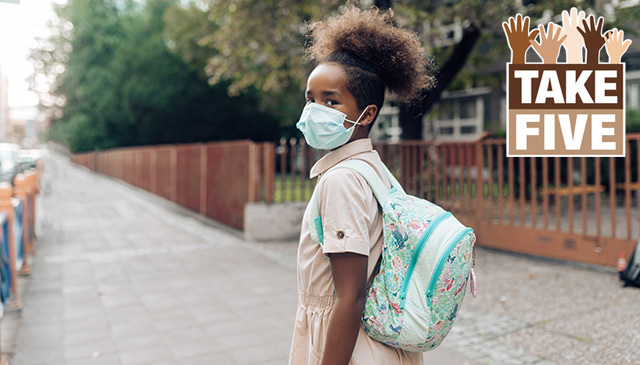
As families of school-aged children and teens prepare to wind down summer and start the school year, we offer 5 steps you can take to center anti-racism in this process.

  1. For the youngest children returning to school, it is important to talk to preschoolers/kindergarteners in a developmentally appropriate way about anti-racism. Sesame Street offers multiple resources, including a Town Hall about race from 2020 (https://www.cnn.com/2020/06/06/app-news-section/cnn-sesame-street-race-town-hall-app-june-6-2020-app/index.html), an episode about learning to be an “Upstander” (https://www.sesameworkshop.org/what-we-do/racial-justice/watch-and-play-together), and additional games and tools for parents to address these issues with their children further (https://www.sesameworkshop.org/what-we-do/racial-justice).
  2. Fill your child’s backpack and shelves with books about race for children at different ages and educational levels. Learn about what to look for in children’s books featuring characters of color https://theconversation.com/rooting-out-racism-in-childrens-books-149432, then check out these book lists to help you get started: https://www.nytimes.com/wirecutter/reviews/antiracist-books-for-kids-and-teens/, https://www.todaysparent.com/family/books/kids-books-that-talk-about-racism/#gallery/books-that-talk-about-racism/slide-29,
  3. The COVID-19 pandemic has made the return to this school year challenging for all families, and Black youth have been disproportionately impacted. Read this report from the Society of Research in Child Development about the differential impact of the pandemic on children’s school progress and educational gains, and consider how you might advocate for policies to help close this gap: https://www.srcd.org/research/addressing-inequities-education-considerations-black-children-and-youth-era-covid-19
  4. Keep up with current news about how schools teach students about race (https://www.texastribune.org/2021/07/09/texas-critical-race-theory-schools-legislation/), learn about critical race theory (https://www.edweek.org/leadership/what-is-critical-race-theory-and-why-is-it-under-attack/2021/05), and read about teachers’ perspectives on how this could impact their teaching (https://www.texastribune.org/2021/08/03/texas-critical-race-theory-social-studies-teachers/)
  5. With everything students, families, and communities have gone through over the past couple years, mental health concerns are peaking (https://www.usnews.com/news/health-news/articles/2021-03-04/childrens-mental-health-crisis-could-be-a-next-wave-in-the-pandemic. Be sure you are aware of how to access mental health support in schools: https://www.texastribune.org/series/texas-schools-mental-health/

Despite the challenges we’ve faced during the COVID-19 pandemic, Anette Sandoval shares how a simple smile can leave a positive and lasting impression on our young patients. Read more

August 23, 2021

We’re at a critical stage in this fight against COVID-19 where everyone’s actions matter, regardless of vaccination status. As we respond to this latest surge, we need to work together and hold each other accountable for practicing safety 24/7.

  • Wear eye protection while in our clinical areas

During this latest surge, proper eye protection (goggles and face shields) is required in our clinical areas, including all in-patient, EC, WAC, peri-operative care and ambulatory environments. The most effective goggles are appropriately fitted, indirectly-vented with a manufacturer’s anti-fog coating. A face shield should have crown and chin protection and wrap around the face to the point of the ear.

  • Mask everywhere and not just at work

At Texas Children’s, universal masking is required, regardless of vaccination status. This practice should not be reserved just for work. We need to mask everywhere, all the time, including the grocery store, social gatherings and any public events (although attending large-scale events is not recommended at this time). Masking remains one of the most effective ways to limit the spread of COVID-19, particularly in the community, where infections continue to rise rapidly.

  • Delta variant and vaccination

It’s more critical than ever to protect ourselves and others. The Pfizer vaccine is now fully approved for individuals 16 years of age and above, which should bring both comfort and confidence to those still needing to be vaccinated. Vaccines protect individuals against consequences due to infection with the Delta variant. The Delta variant is highly contagious and readily transmissible among those who are vaccinated and unvaccinated. With few exceptions, vaccines are highly protective against serious illness/hospitalization and reduce the risk of transmission. Recently, the CDC’s Advisory Committee on Immunization Practices recommended allowing an additional dose for immunocompromised individuals, which we are administering to those who meet the guidance.

August 19, 2021

As we continue to battle through this latest wave of COVID-19, we’re reminding all Texas Children’s team members to excel at our safe practices while at work, at home and in public.

Texas Children’s remains among the safest places to work – even with a surge of positive cases in our communities – because of the precautions we’ve put in place, including universal masking, hand hygiene, daily screening and maintaining (and growing) our high vaccination rate. Although this has proven successful for us throughout the pandemic, we’re counting on you to remain diligent and to practice safety 24/7, at work and at home.

Safety 24/7
  • Continue to mask everywhere. At Texas Children’s, masking is required in both patient and non-patient care areas, regardless of vaccination status. This includes wearing a mask from the time you leave your personal mode of transportation to when you return. In addition, it is highly recommended you always wear a mask while in public, as it remains an effective way to limit the spread of COVID-19.
  • Be safe on shuttles and elevators. Capacity limits for our shuttles and elevators are continuously evaluated to ensure safe operations. Please do your part by avoiding overcrowding in these areas. For elevators, this typically means no more than 4-6 individuals at any given time. On shuttles, please do not stand in the aisles. If a shuttle is ever at capacity, please wait for another so you can be seated. If you tend to ride the shuttle during peak hours, please consider arriving slightly earlier to ensure safe transportation. Regardless of vaccination status, wearing a mask throughout your shuttle trip is required. As an additional safety precaution, please do not eat or drink while riding the shuttle to ensure your mask is worn at all times.
  • Get vaccinated. Texas Children’s now requires all workforce members to get vaccinated against COVID-19, or have an approved exemption, with the first dose required by Sept. 21. If you have not done so already, please get this highly effective protection against COVID-19 as soon as possible.
  • Practice hand hygiene. Wash your hands frequently and thoroughly. Clean your hands often with soap and water for at least 20 seconds or use hand sanitizer with at least 60% alcohol. Please also use the hand sanitizers present at all hospital campuses and care locations.
  • Report any symptoms of COVID-19, or any exposures to a COVID positive person in which appropriate PPE was not utilized, to Employee Health – even if you have already been vaccinated.
August 17, 2021

On Aug. 12, the Food and Drug Administration (FDA) amended its emergency use authorizations for both the Pfizer (12 years and up) and Moderna (18 years and up) COVID-19 vaccines, and on Aug. 13, the CDC’s Advisory Committee on Immunization Practices recommended allowing an additional dose for immunocompromised individuals.

With communities under threat from the Delta variant, these actions allow certain immunocompromised individuals to receive an additional mRNA vaccine dose to further protect against this highly contagious strain of the virus. For more details on this guidance, please see below:

  • This authorization only applies to the Pfizer and Moderna vaccines.
  • Immunocompromised individuals who choose to receive an additional dose are recommended to choose the same brand of the vaccine they originally received.
  • Until more data is available, the additional dose of mRNA COVID-19 vaccine should be administered at least 28 days after completion of the primary mRNA COVID-19 vaccine series.
  • For those who received the Johnson & Johnson vaccine, currently there is not data to support the use of an additional mRNA COVID-19 vaccine dose after a primary J&J COVID-19 vaccine in immunocompromised people. The FDA and CDC are actively working to provide guidance on this issue.
  • At this time, all other individuals who are fully vaccinated have not been recommended to receive an additional dose.

With many of our patients considered to be immunocompromised – and at greater risk of serious illness due to COVID-19 – Texas Children’s began administering additional doses today.

If you feel you meet this new guidance for receiving an additional dose, and would like to schedule an appointment through Texas Children’s, you may do so now by clicking here. Please be sure to bring your vaccine card to your appointment.

For questions related to this new guidance, please contact our Vaccine Employee Support line at 832-VACCINE (832-822-2463).